ARTIST STATEMENT
We live in a world where materials appear as if through magic. The objects that structure daily life, our smartphones and laptops, the glass, concrete, and ceramics we use, show up as smooth, finished surfaces that feel oddly weightless. Their slick exteriors hide what they are actually made from, making the landscapes of origin and the energy intensive processes behind their production largely invisible. My work starts from that feeling of disconnection, and from wanting to understand what’s been pushed out of sight.
A strategy I use in my work is material un-hiding: a process of slowing down, naming materials, and tracing their origins. Rather than suggesting that art can save the world, I’m interested in how it might shift perception, and how we might become more attentive as consumers and makers. I believe that art, design, and visual culture has a role to play in how we visualize and ultimately understand our contemporary position of ecological crisis.
My interest in materiality began with early experiences of travel across the interior of Australia. As a child, I was drawn to small objects encountered along the way; mineral samples, carved wooden forms, and handmade artifacts that seemed to hold a quiet sense of wonder. These objects did not mark a specific place so much as condense entire journeys into tangible form. I was captivated by their material presence, and by the way they carried traces of culture, landscape, and meaning.
Over time, that sense of wonder became more complicated. I began to recognize the entanglements behind these objects: their production for tourist economies, their disconnection from makers and communities, and their relationship to systems of extraction. As an artist working with material transformation, I remain implicated in these same systems. This tension now drives my practice.
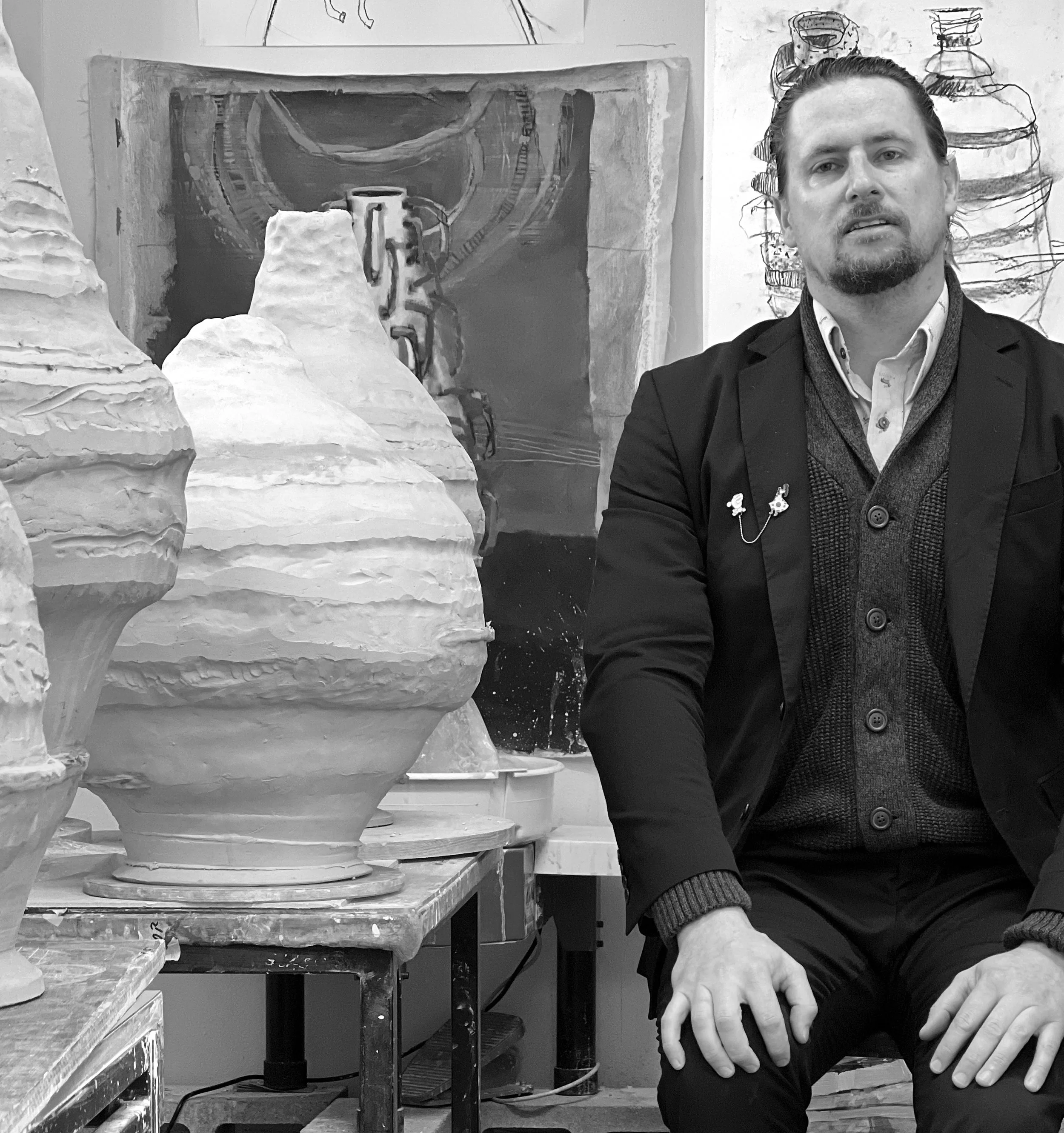
I also move across mediums to meet ideas. A recurring strategy is the use of landmass forms and elemental inventories to reconnect objects to place. In drawings, glaze recipes are rendered as stratified landscapes. In sculpture and bronze casting, everyday objects become geological artifacts. Through the use of unfired clay, the human body appears as a temporary arrangement of minerals. In each case, materials are treated not as passive media, but as agents within ongoing geological processes.
Central to this practice is the concept of the technofossil, human-engineered materials that will persist in the Earth’s strata for millions of years. Ceramics, plastics, metals, and industrial byproducts become future evidence of our contemporary presence. By framing ceramic artworks as technofossils, I position them simultaneously as contemporary objects and evidence embedded within the longer timescales of the Anthropocene.