MOBILE PHONE LANDSCAPE
MOBILE PHONE LANDSCAPE, 2026 CE
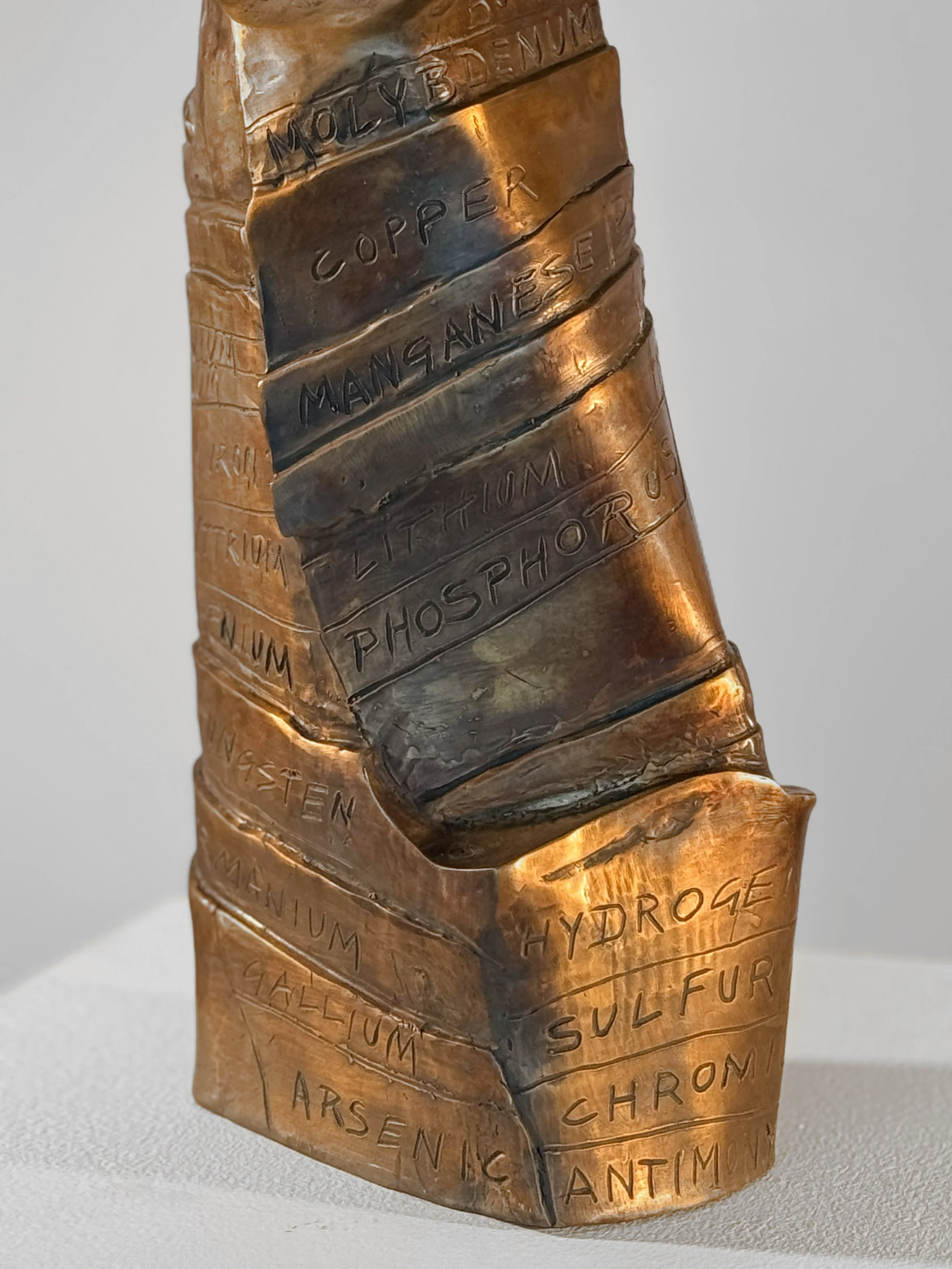
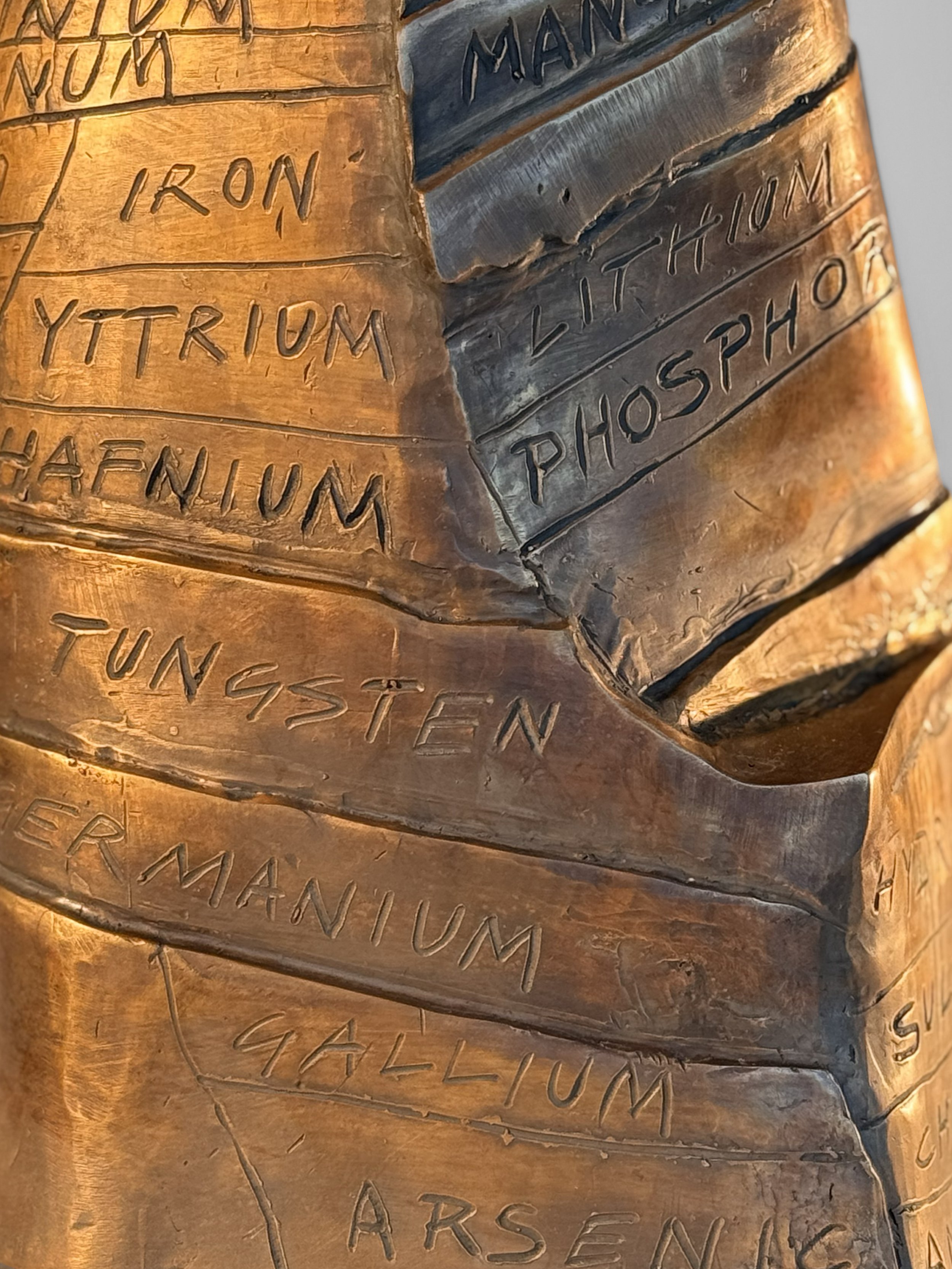
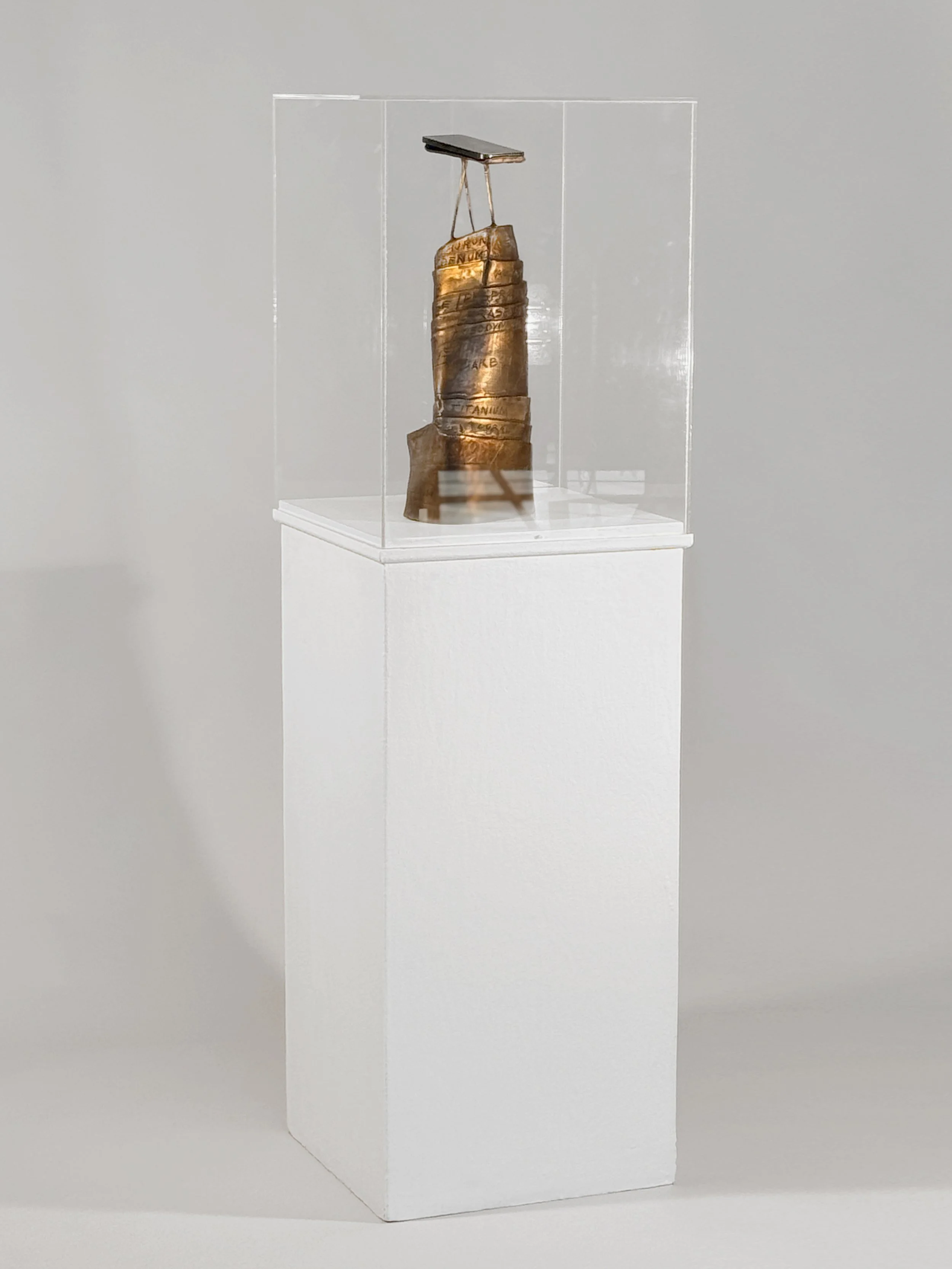
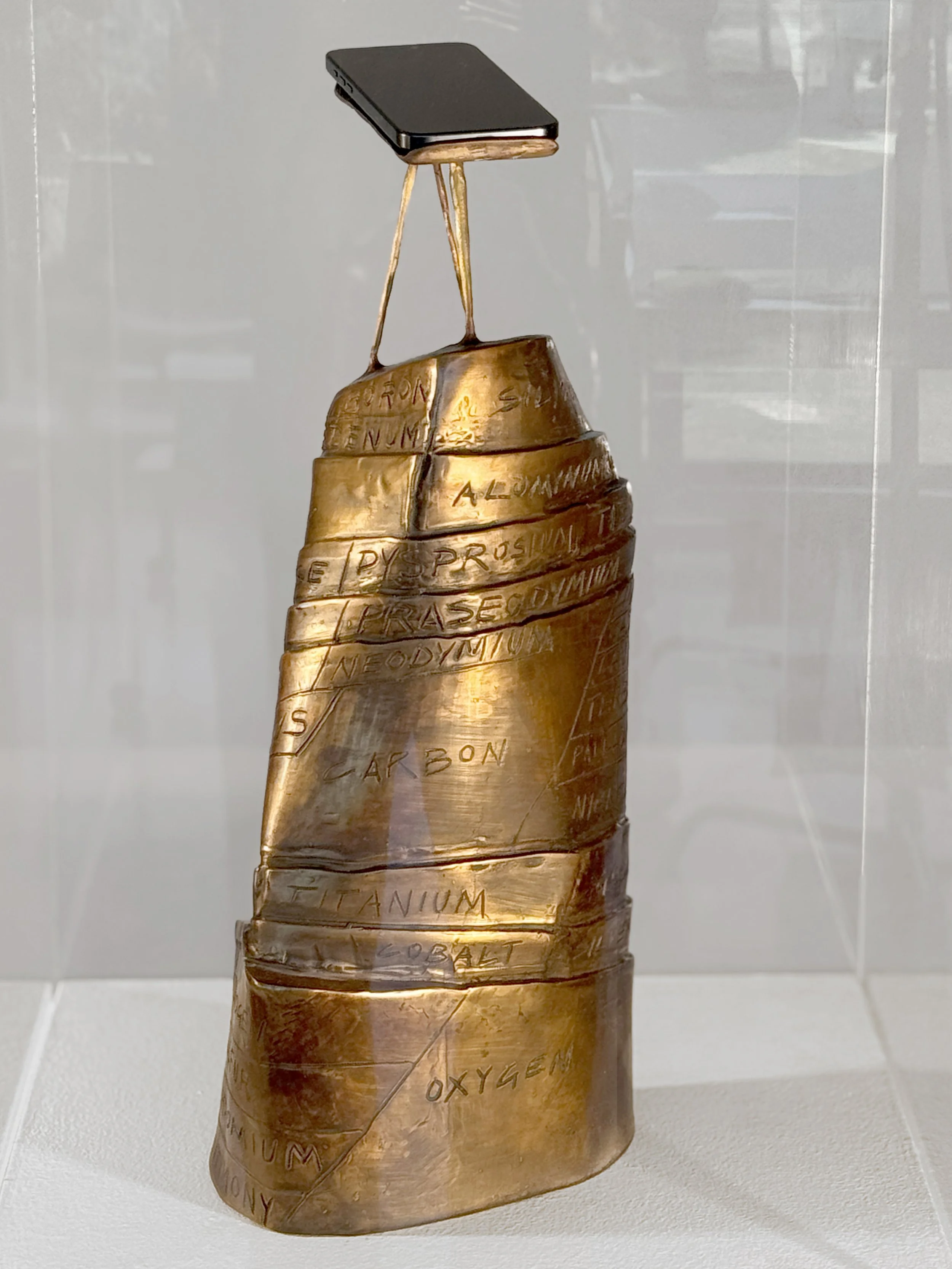
Cast Bronze, MOBILE Phone, in vitrine.
10 x 7 x 23 INCHES

Most people are unlikely to know what the soft, silvery rare earth element Yttrium is, or that it is used for its ability to withstand high temperatures in advanced alloy superconductors, as well as its luminescent properties that enable the emission of red light in screen displays. Yet it has been embedded within the devices we carry in our pockets for years.
This is precisely the point of the work: mobile phones, like most objects we encounter in everyday life, obscure the vast systems and networks of extraction, refinement, and production they depend upon. Yttrium also appears in another of my artworks, Greenland to Texas, 2026 CE, where it is broken down as one of the rare earth elements within Greenland’s mineral landscape, highlighting how consumer technologies are entangled with geopolitical pressures, including proposals such as the strategic acquisition of new resource territories.
The use of bronze creates an intentionally absurd gesture, a kind of memorial sculpture for a mobile phone, but that absurdity is exactly what I am trying to communicate, since these devices are long-life geological objects, built from rare earth materials that will persist in the stratigraphic record for thousands, if not millions, of years. This is also my commitment to material honesty in this body of work, presenting things as they are: to name them, to frame them, and to resist the focus on their short-use obsolescence lifecycle. In doing so, I’m aligning with a kind of new materialism, reframing objects like mobile phones, much like ceramics, as technofossils.