
TECHNOFOSSILS

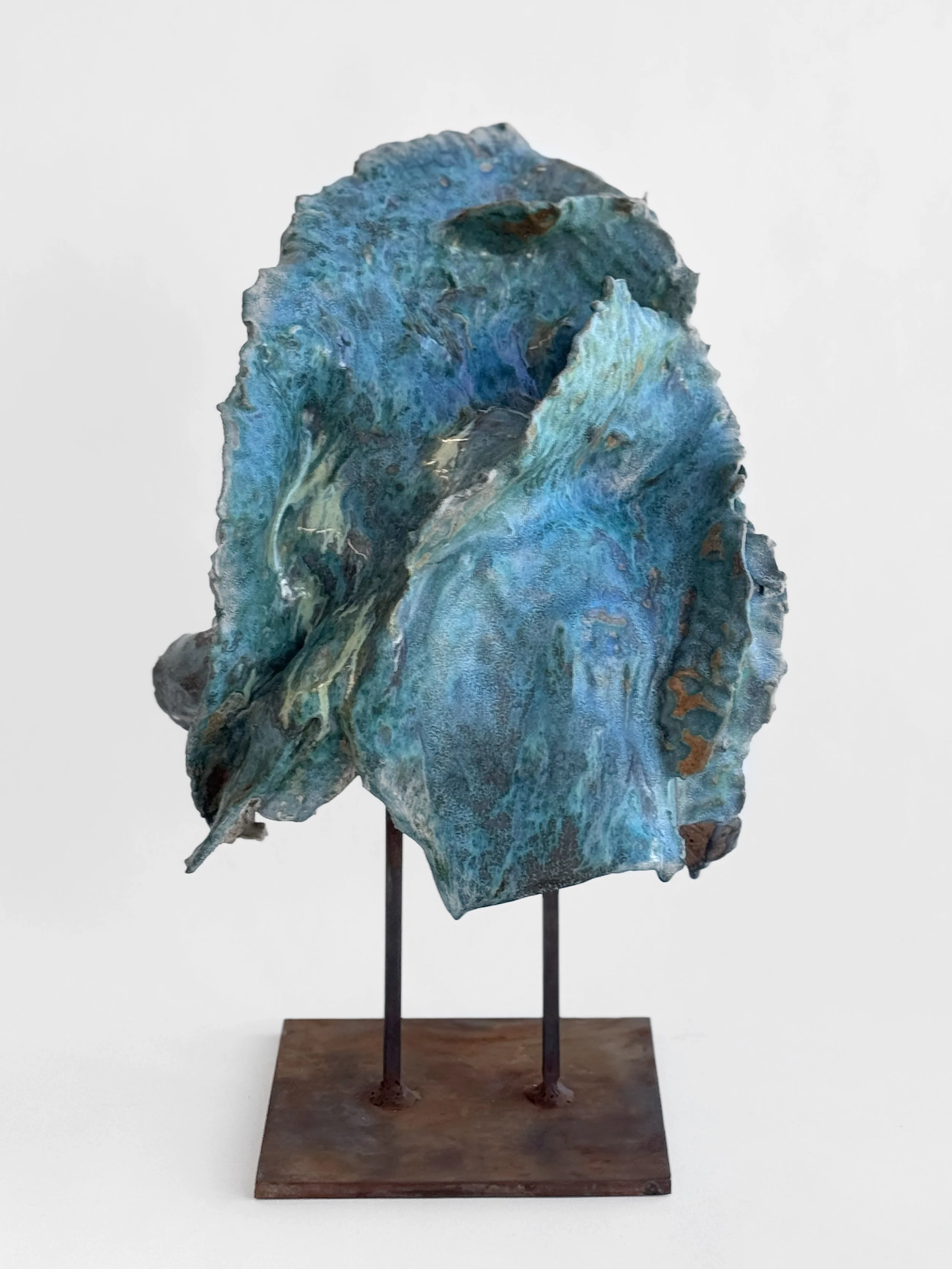
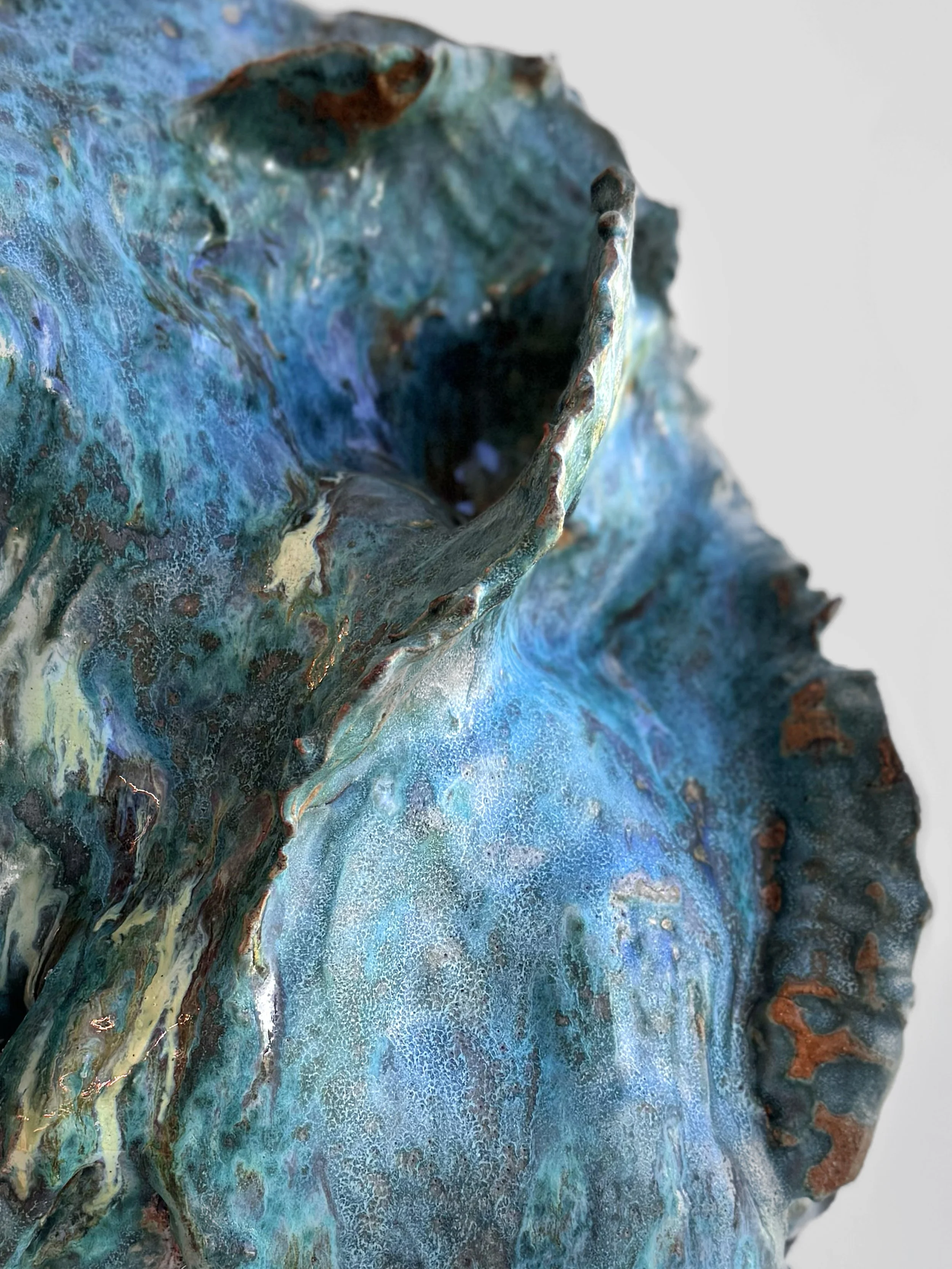
BINGHAM CANYON MINE -
TECHNOFOSSIL, 2026 CE
SALT LAKE BLUE GLAZE, ON RECLAIMED STONEWARE CLAY, OXIDIZED IRON, RECYCLED WOOD.
14 x 14 x 52 INCHES

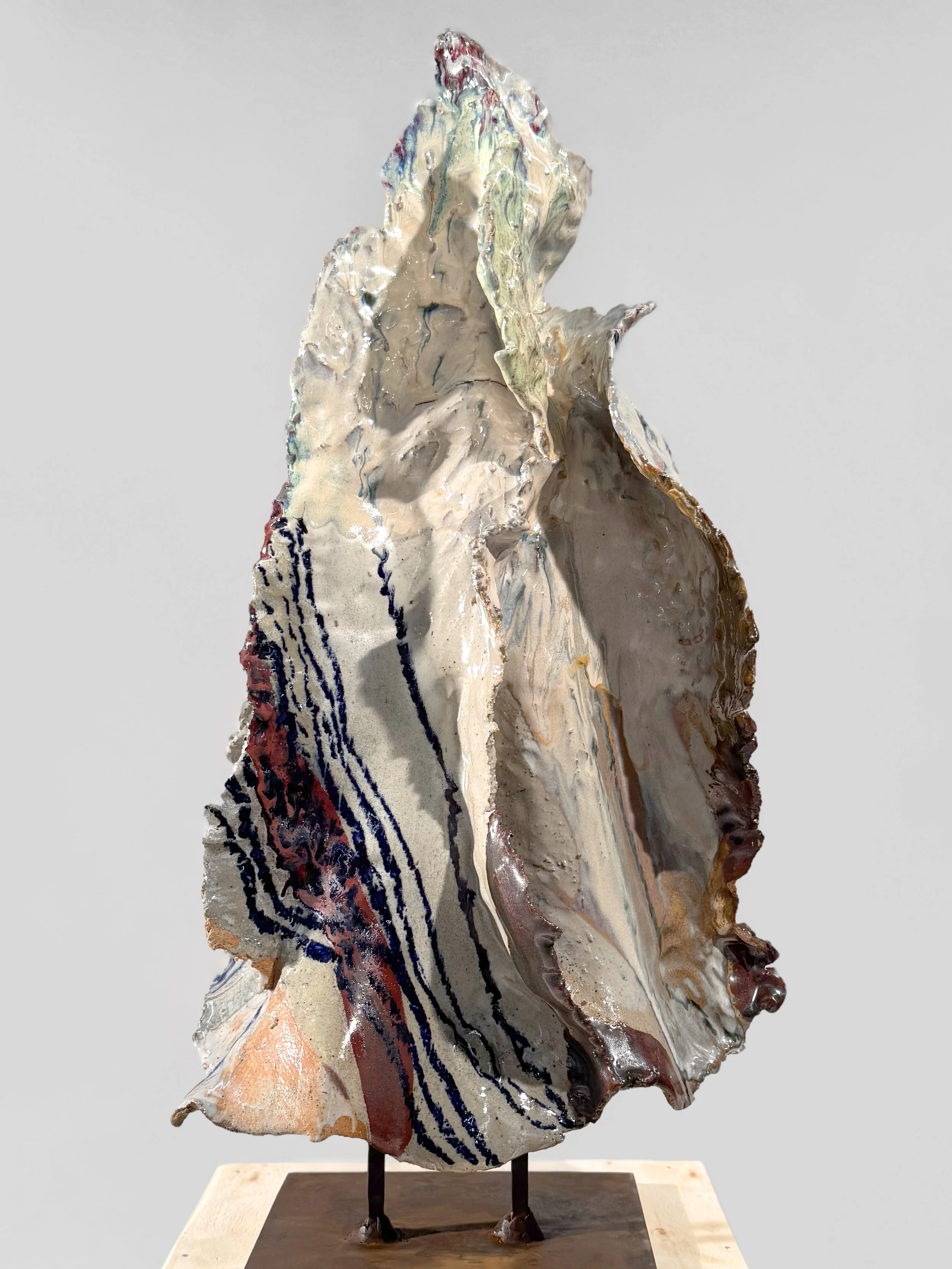
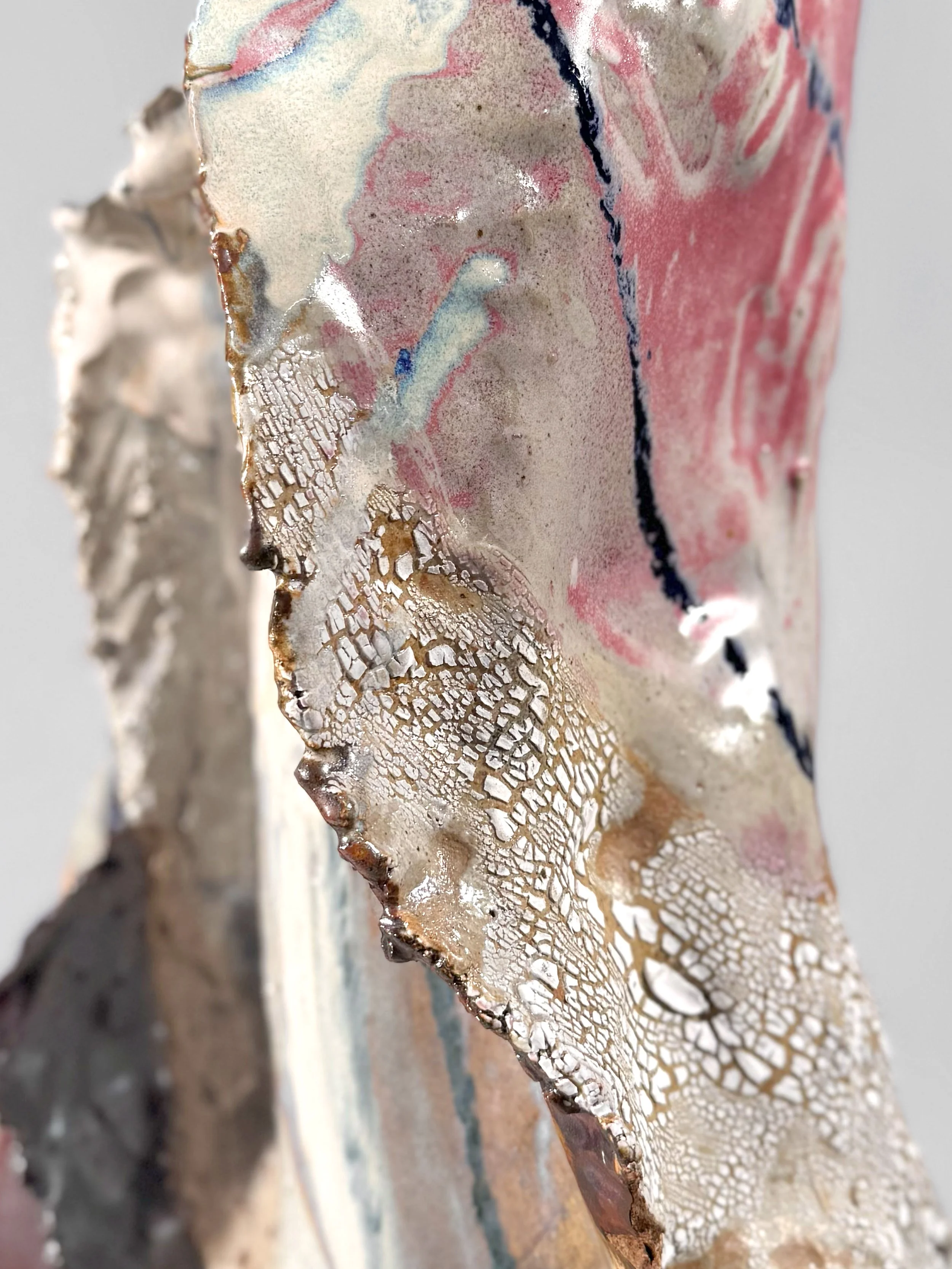
GEOLOGICAL FRICTION TERRAIN -
TECHNOFOSSIL, 2026 CE
POLYGLAZE, ON RECLAIMED STONEWARE CLAY, OXIDIZED IRON, RECYCLED WOOD.
15 x 15 x 64 INCHES
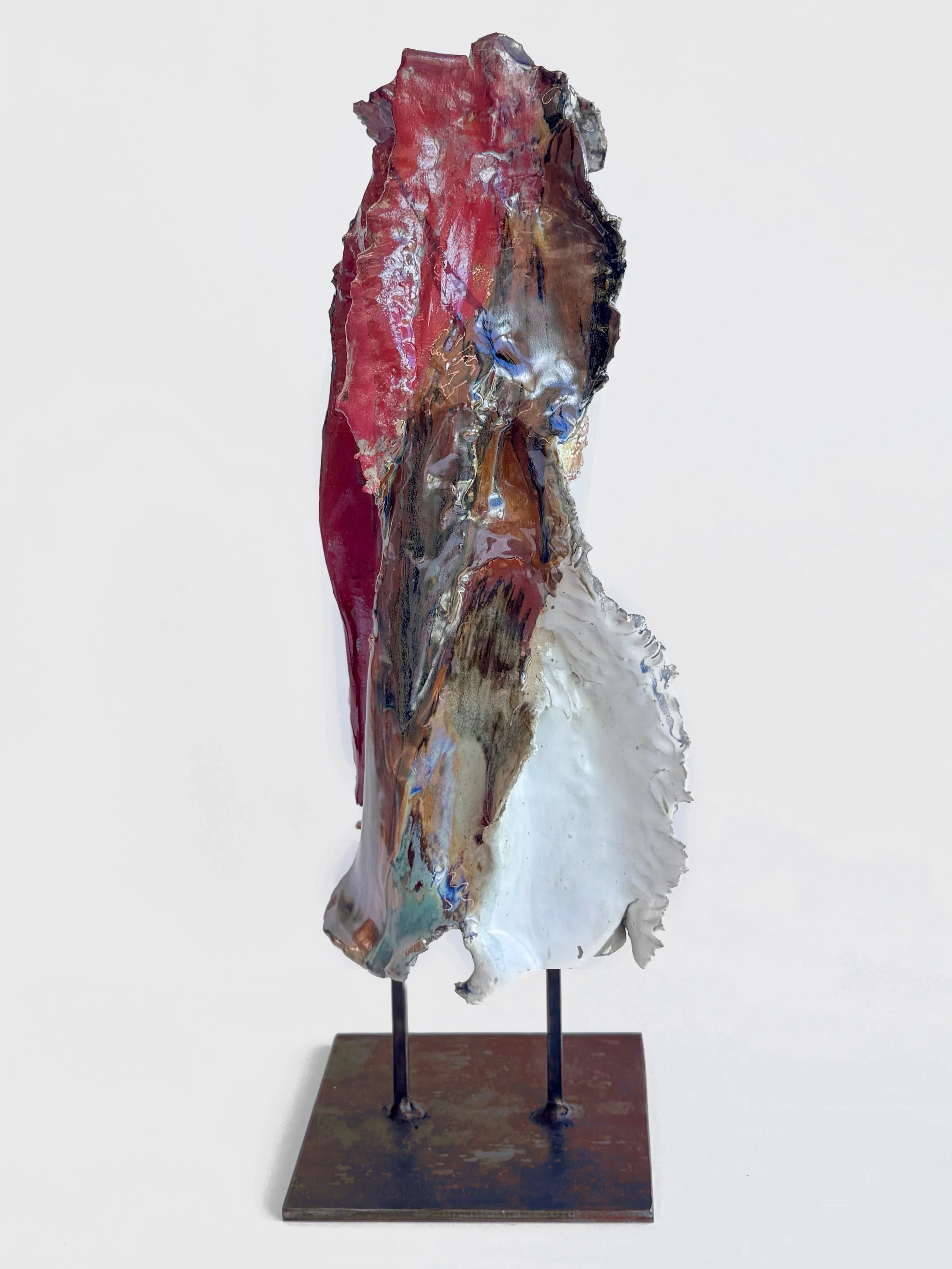
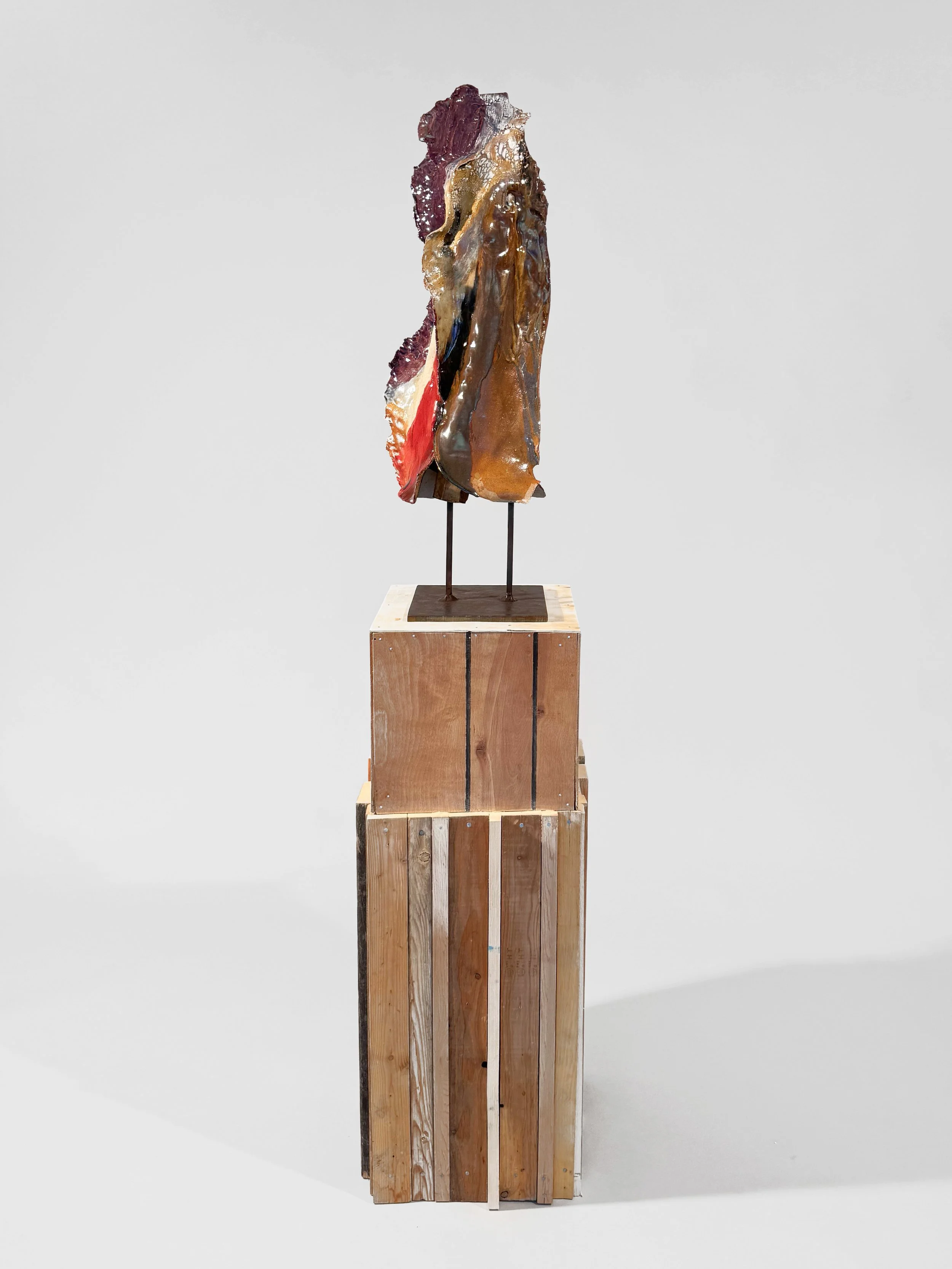
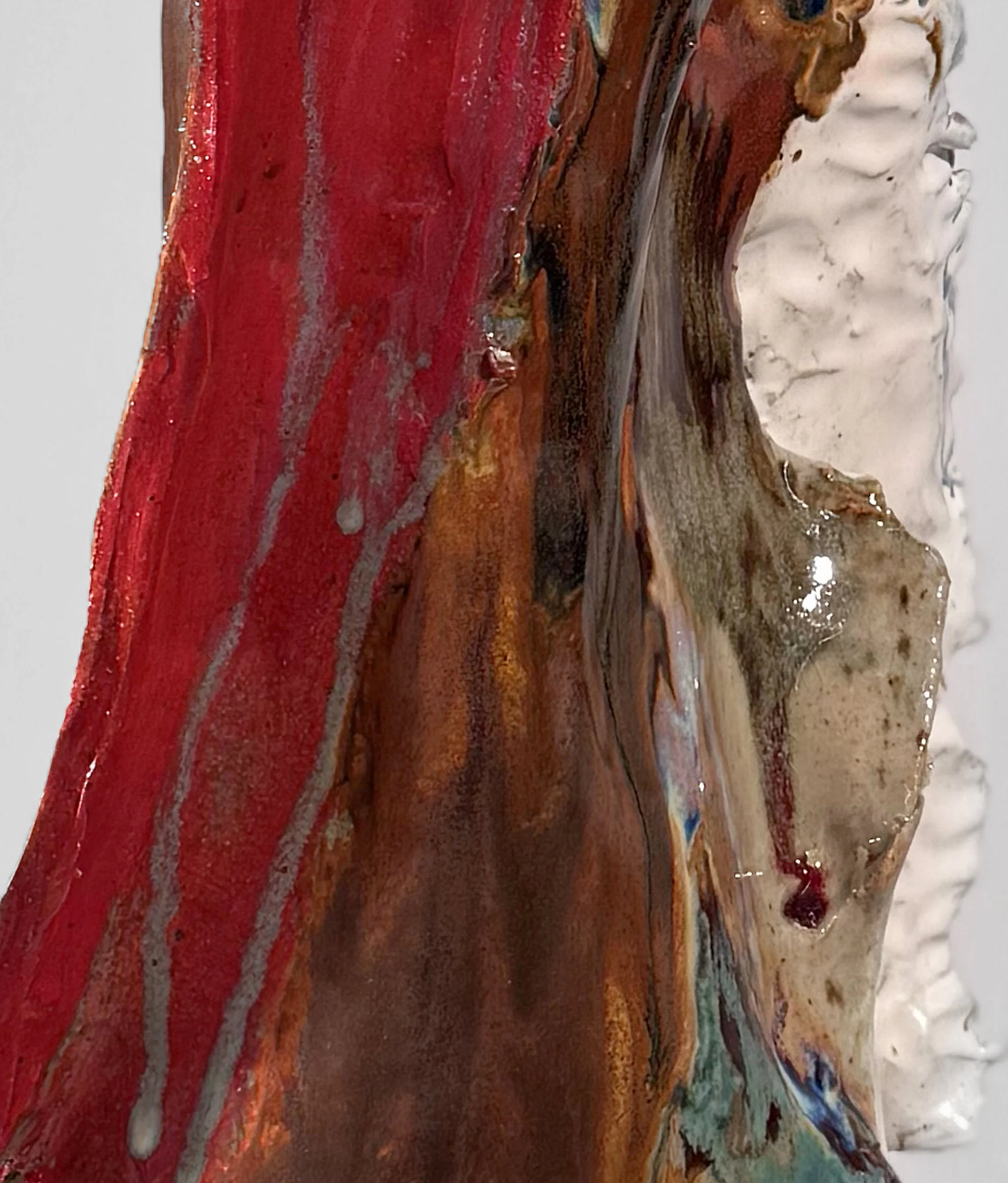
FLOWING STRATA -
TECHNOFOSSIL, 2026 CE
POLYGLAZE, ON RECLAIMED STONEWARE CLAY, OXIDIZED IRON, RECYCLED WOOD.
15 x 15 x 66 INCHES
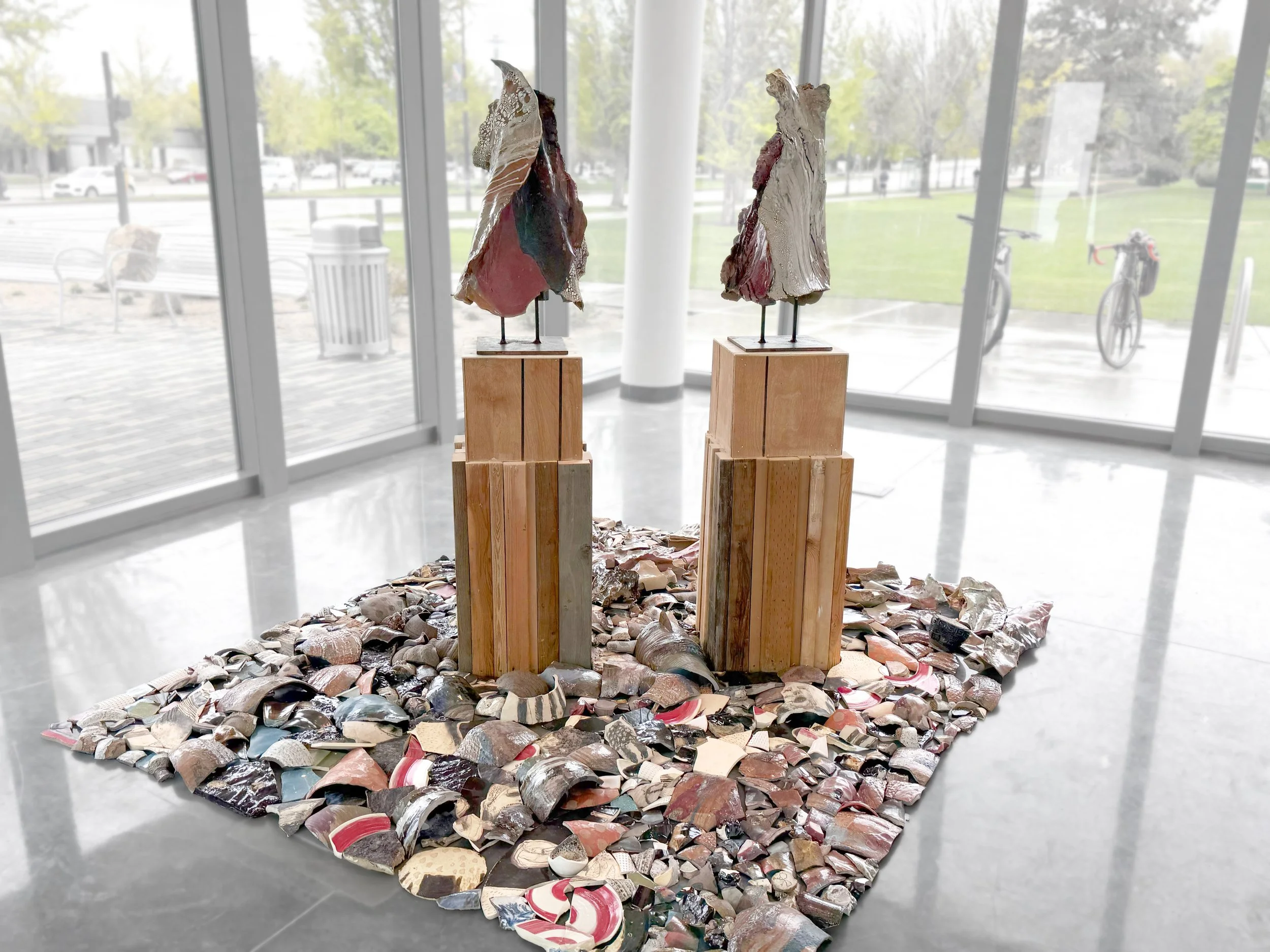
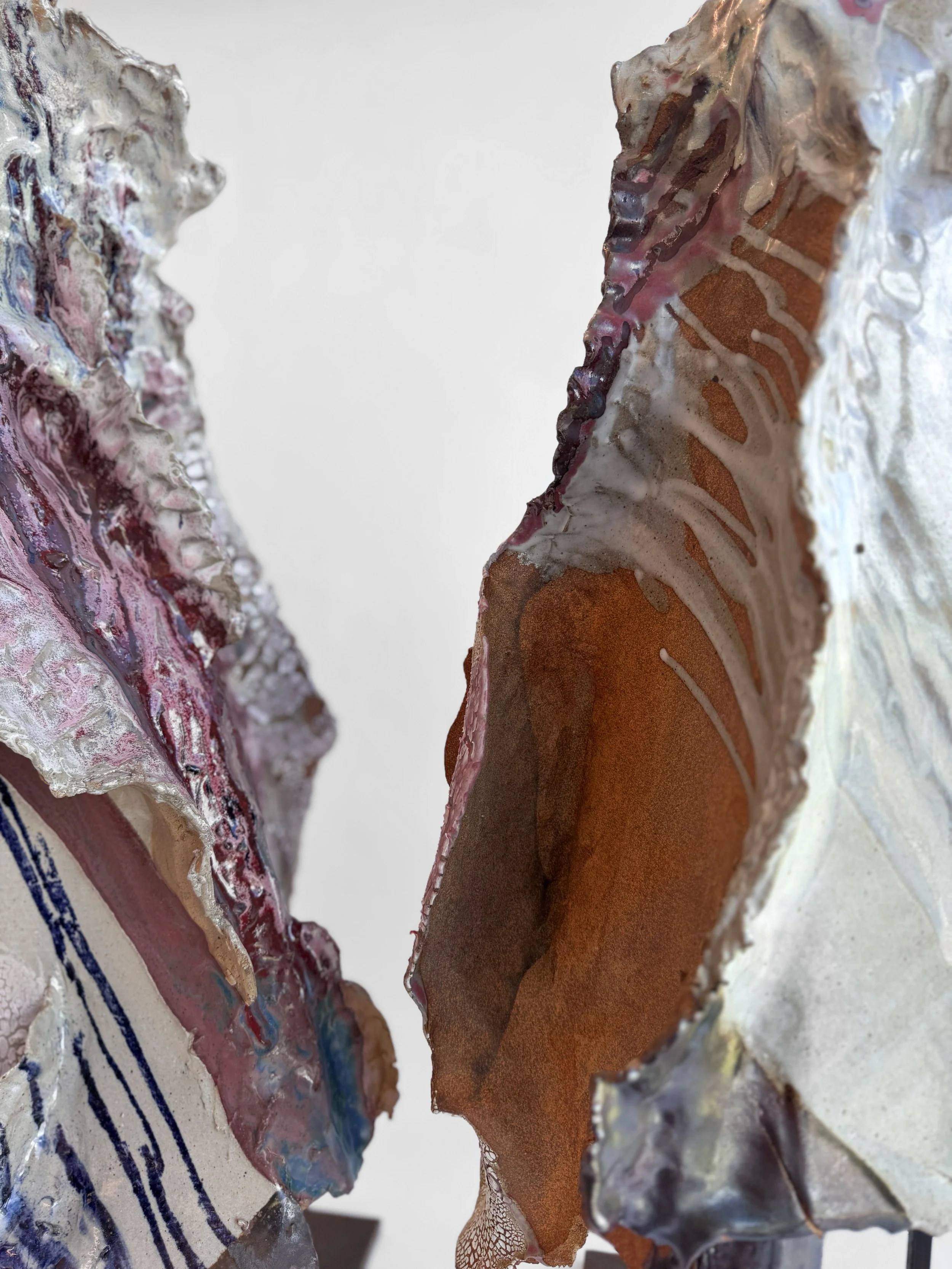
THE SLOW VIOLENCE OF EXTRACTION -
TECHNOFOSSIL A & B, 2026 CE
POLYGLAZE, ON RECLAIMED STONEWARE CLAY, OXIDIZED IRON, RECYCLED WOOD, CERAMIC SHARDS.
79 x 88 X 66 INCHES
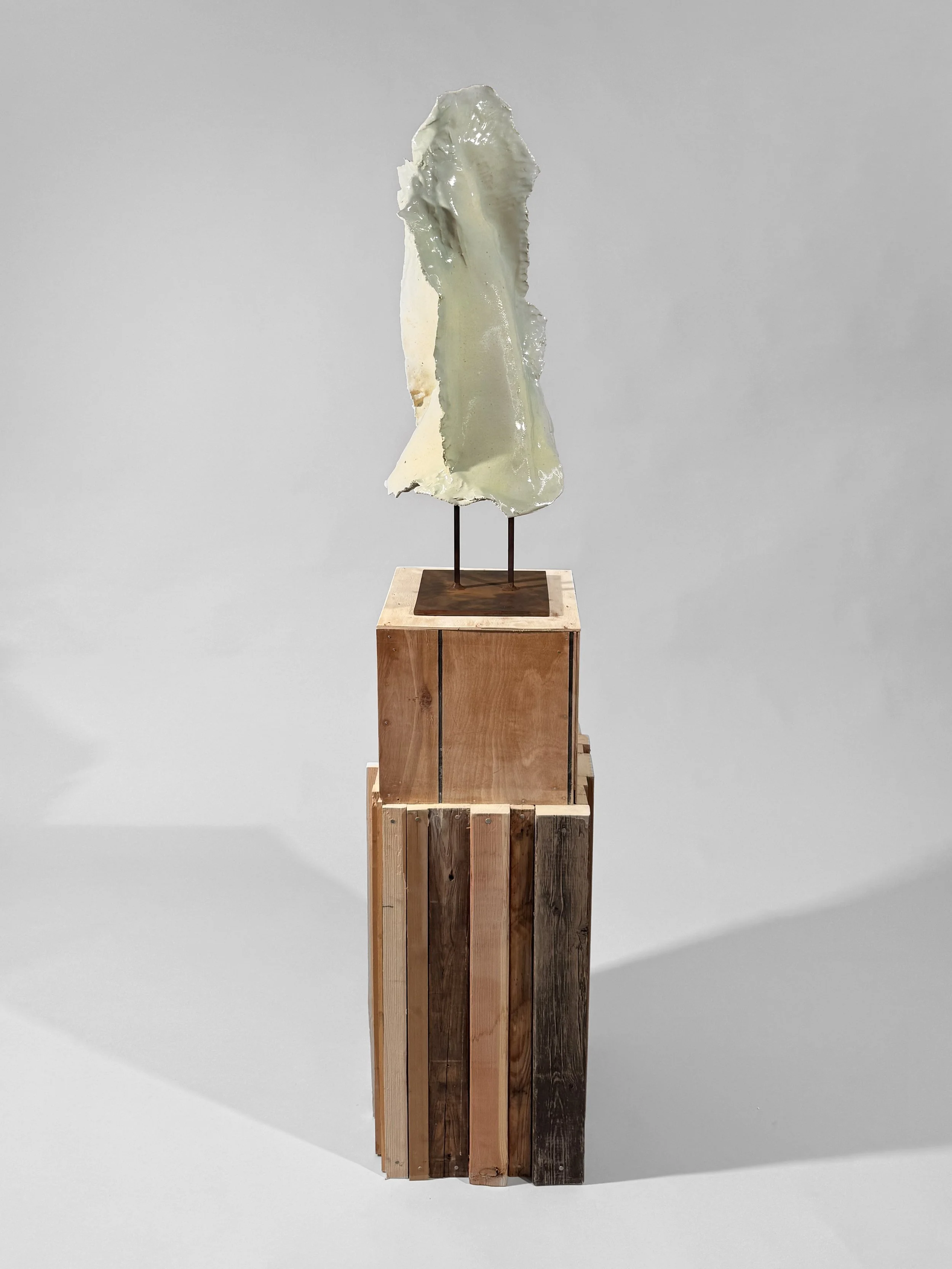
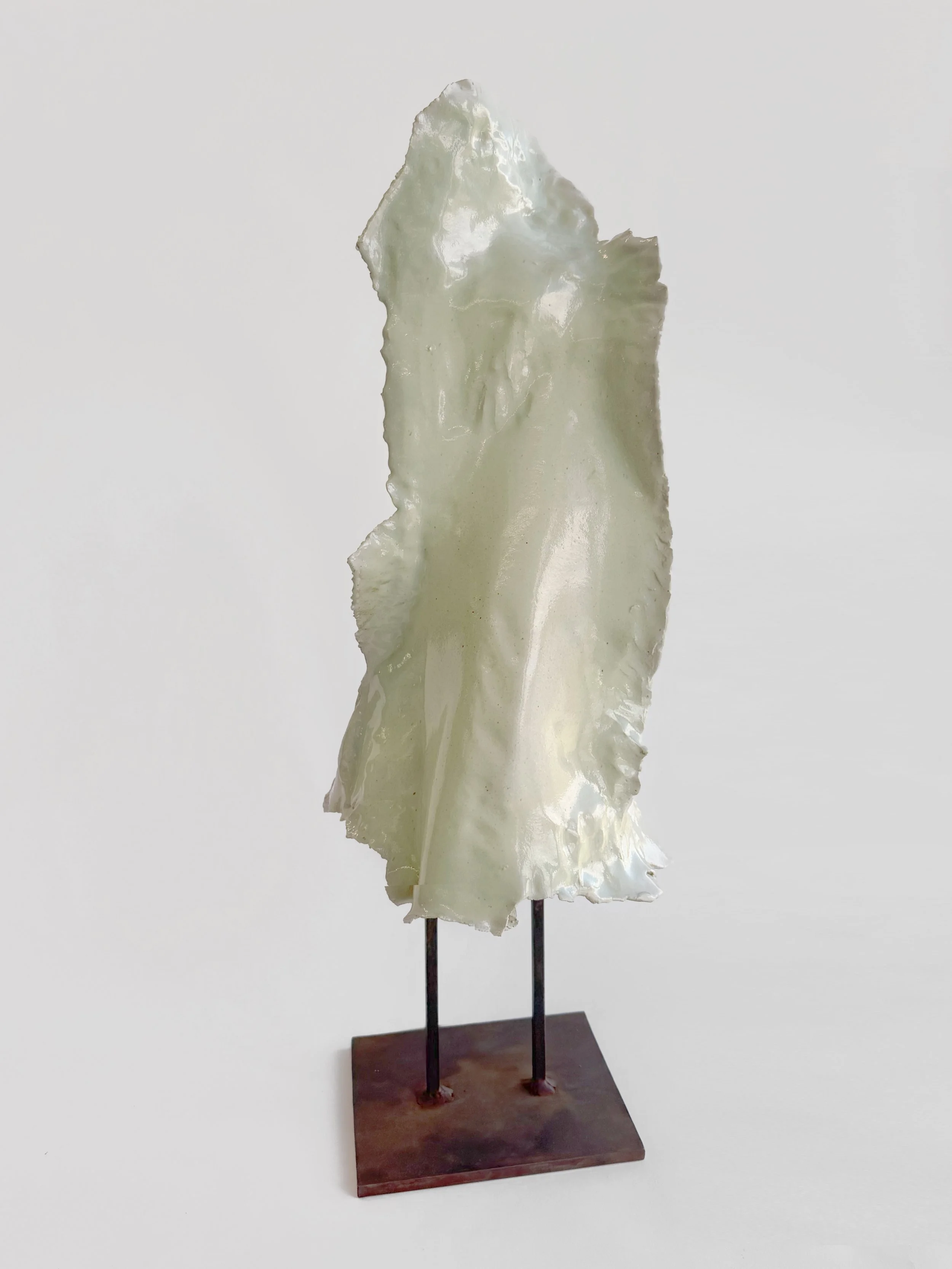
BIOLOGICAL TERRAIN -
TECHNOFOSSIL, 2026 CE
OXIDIZED VEGAS RED GLAZE, ON RECLAIMED STONEWARE CLAY, OXIDIZED IRON, RECYCLED WOOD.
15 x 15 x 67 INCHES

Ceramics have long functioned as one of the primary ways we come to know the past. Their durability allows them to persist where other materials decay, carrying evidence of daily life, trade, culture, and technological knowledge across vast spans of time; think of the Greeks and the Egyptians. Ceramics are not only objects, but records, evidence, and material witnesses that make histories legible. It is precisely this capacity for endurance that situates them within the logic of the technofossil.
In these works, I am reframing ceramic sculptural art as technofossils and positioning them alongside other technofossils, including: plastic, aluminum, glass, concrete, vitrified industrial slags, radioactive isotopes from nuclear testing, synthetic minerals, engineered nanoparticles, and microplastics. In this context, ceramics are no longer simply cultural artifacts, they become part of a broader material legacy of the Anthropocene.
One work anchors this investigation in a specific geography, tracing its material origins to a copper mining site in Utah, reconnecting the specific Salt Lake Blue glaze to place. In contrast, other works are composed of complex polyglazes, layered combinations of up to ten different glaze recipes, making them almost geographically untraceable. They exist as true products of the Anthropocene, formed through systems that operate at scales and speeds far removed from localized making. This condition stands in tension with Indigenous ceramic practices, which are often grounded in principles of reciprocity, material respect, shorter and less intense firing cycles, as well as an attitude of only taking what is needed. Where industrial systems extract at scale, these approaches remain embedded in place, emphasizing care, continuity, and ecological awareness.
The surfaces of The Slow Violence of Extraction - Technofossil A & B, 2026 CE, appear to rupture, as though in the process of being torn apart. Glossy glaze becomes visceral, suggesting exposed, almost bloody interiors. These moments introduce an emotional register into what might otherwise remain a strictly material analysis, engaging with the concept of slow violence by Rob Nixon, which describes the often invisible, incremental damage caused by centuries of extraction and environmental degradation. Here, that violence is made immediate and bodily.
The sculptural installations extend beyond the ceramic forms themselves. Pedestals constructed from reclaimed and deteriorating wood, scattered ceramic shards, and rusted, oxidized iron bases situate each work within a timeline of decay. Together, these elements operate across multiple scales: wood decaying and returning to the ground and industrial metals corroding over decades, with vitrified ceramics persisting for millennia. The artwork becomes not a singular object, but a temporal system, an arrangement of materials moving through cycles of formation, use, breakdown, and endurance.
Across this body of work, ceramics shift from representation toward material evidence. They ask not only what an object is, but what it will become, and what it reveals about the systems that produced it. In doing so, the works do not argue against making, but instead call for a more attentive and responsible engagement with the materials and processes we choose to use.