GLAZE LANDSCAPES
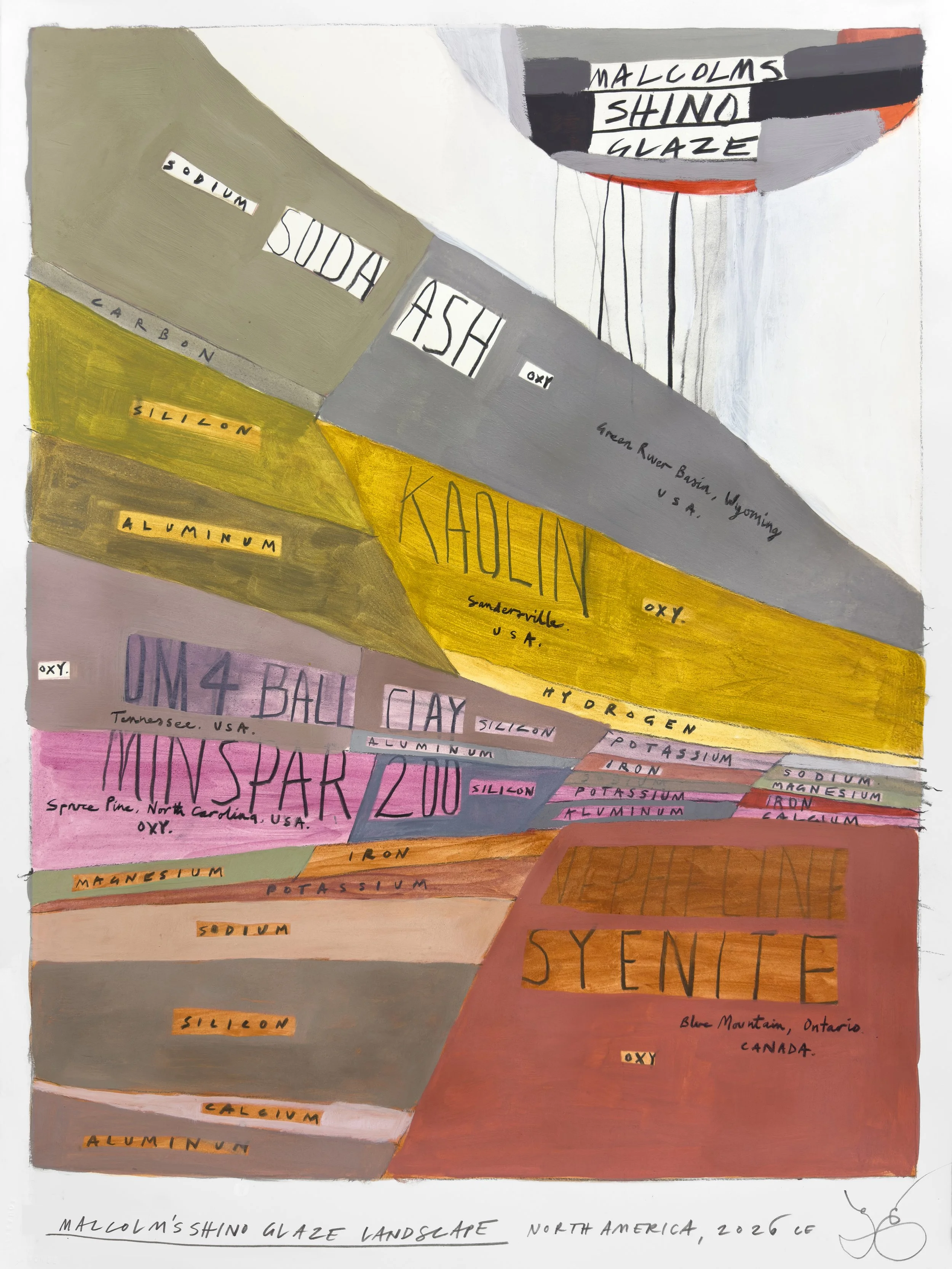
MALCOLM’S SHINO GLAZE LANDSCAPE -
NORTH AMERICA, 2026 CE
CHARCOAL, AND GOUACHE, ON 300GSM ARCHIVAL PAPER
22.5 x 30 INCHES
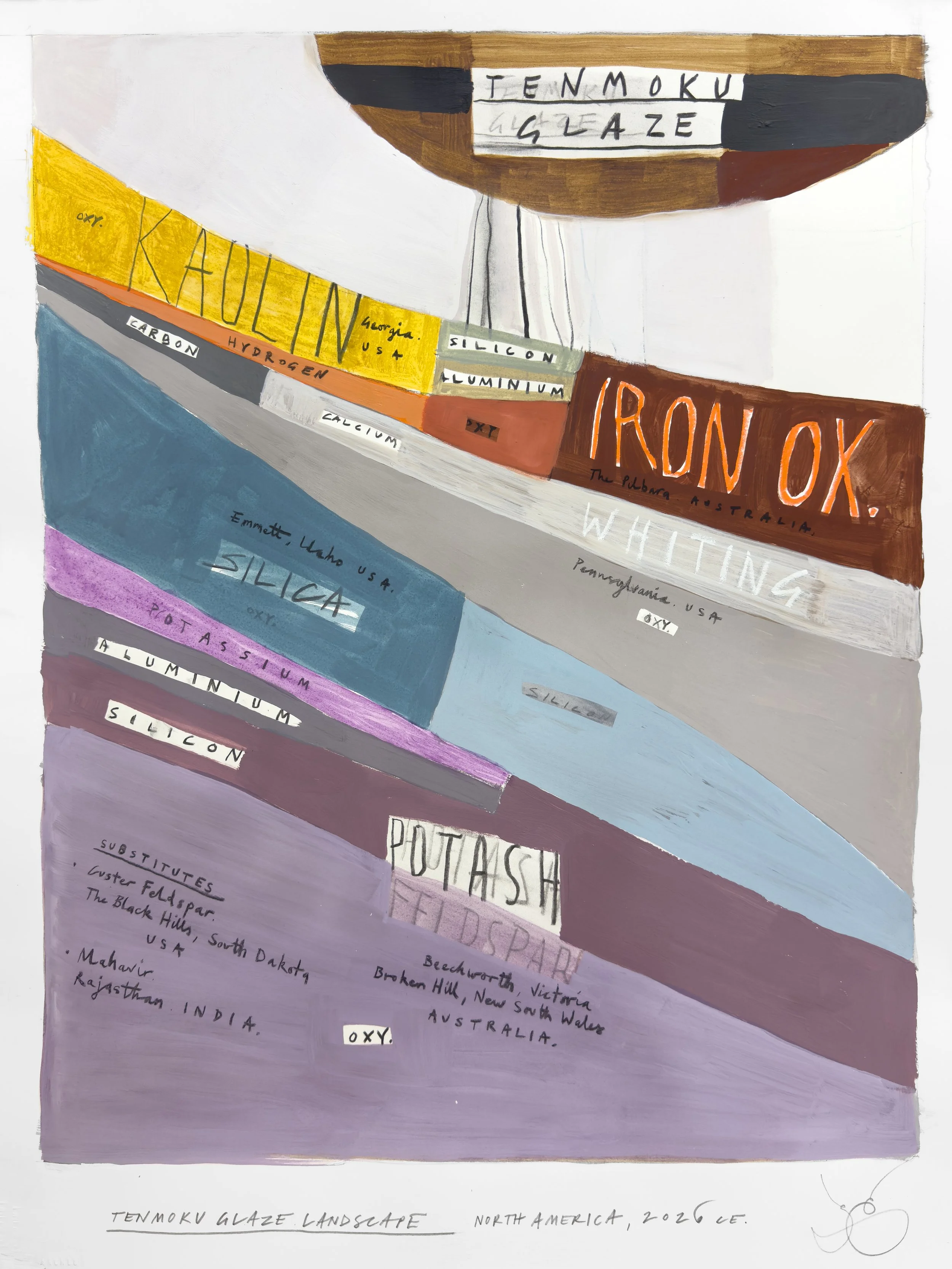
TENMOKU GLAZE LANDSCAPE -
NORTH AMERICA, 2026 CE
CHARCOAL, AND GOUACHE, ON 300GSM ARCHIVAL PAPER
22.5 x 30 INCHES

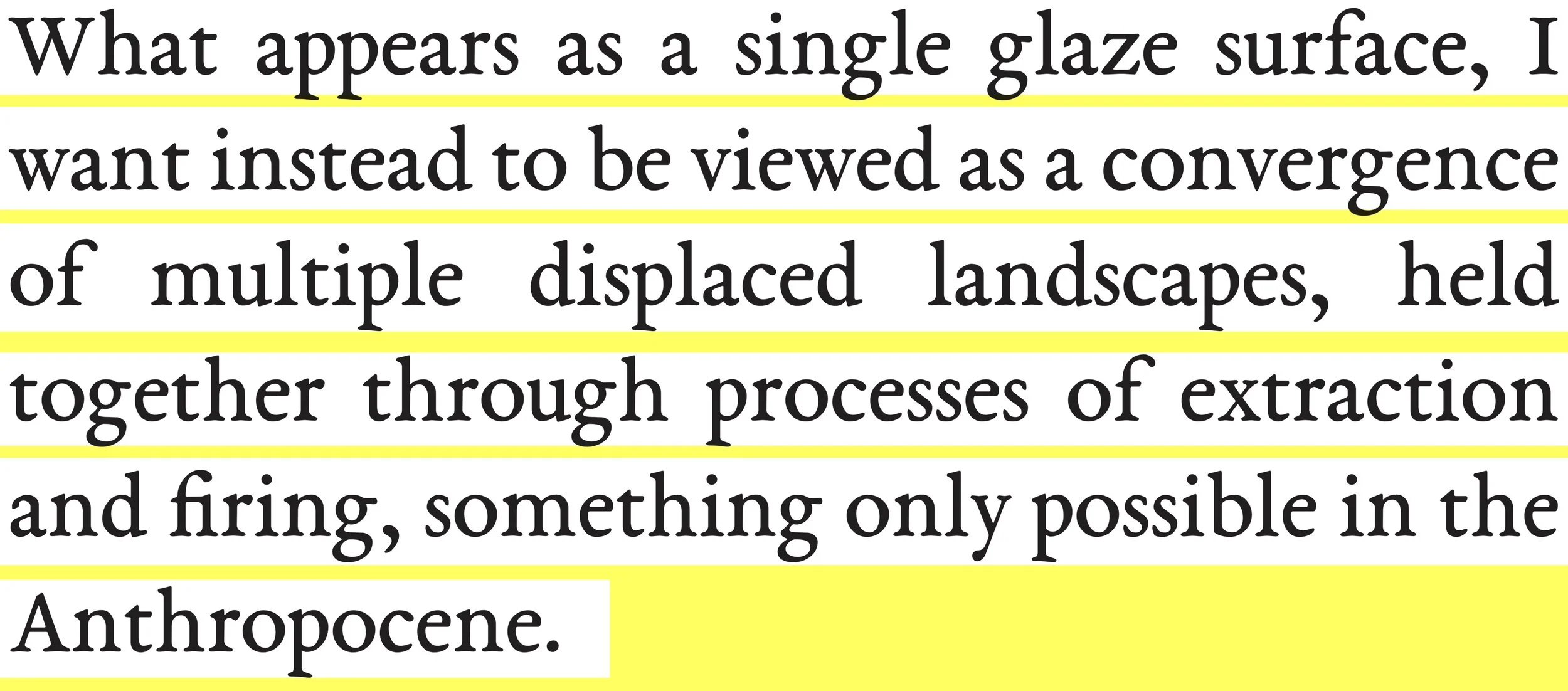
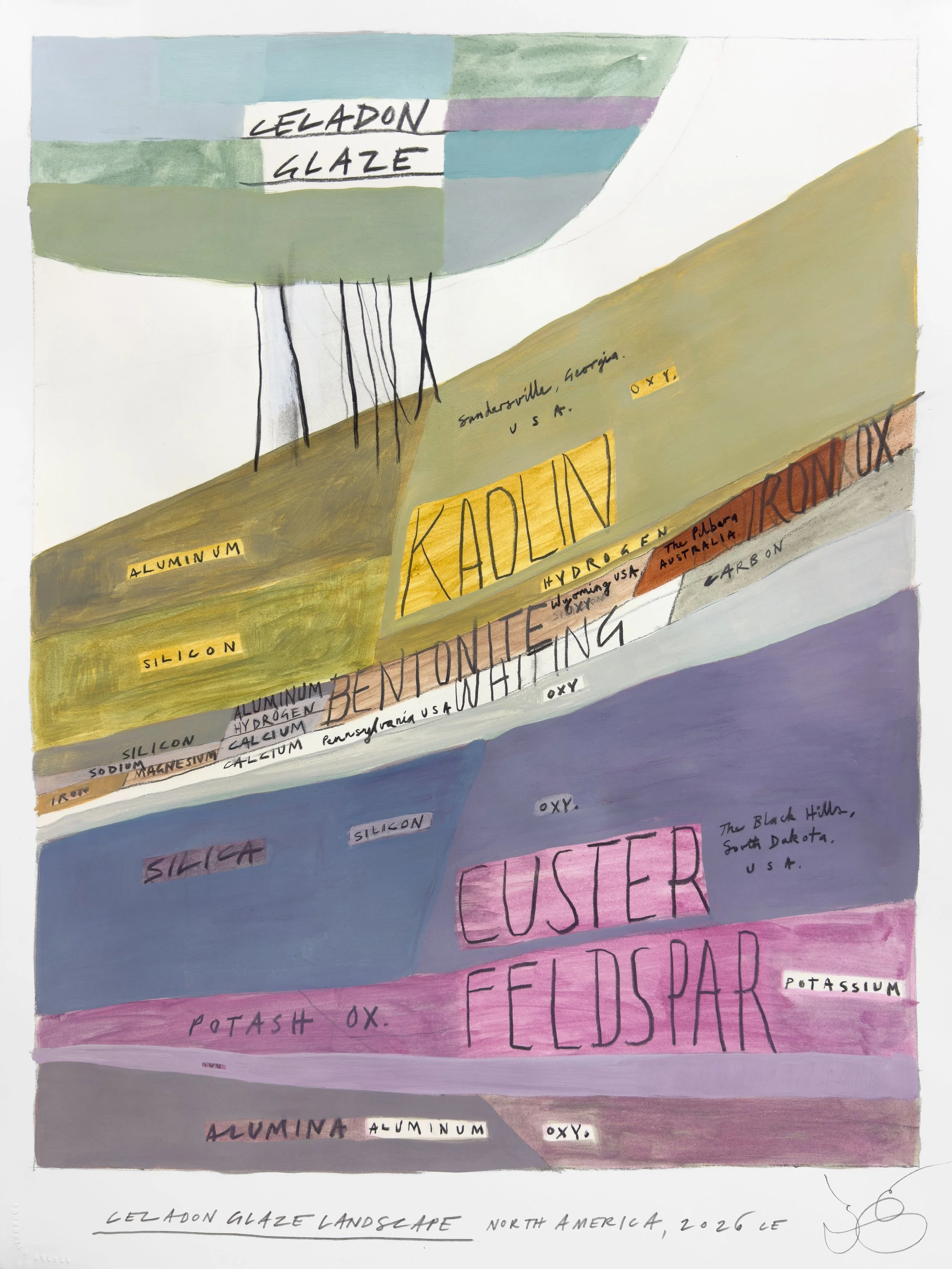
This body of work began through a practical shift in the studio. After moving to the United States to pursue my MFA, I brought with me glaze recipes collected in Australia, only to find that many of the materials I relied on were not available. I was forced to substitute ingredients, and then substitute again when one of those replacements; Custer Feldspar, also disappeared from supply. This process made something clear: materials are not stable or neutral, but finite, and embedded within shifting systems of extraction and distribution.
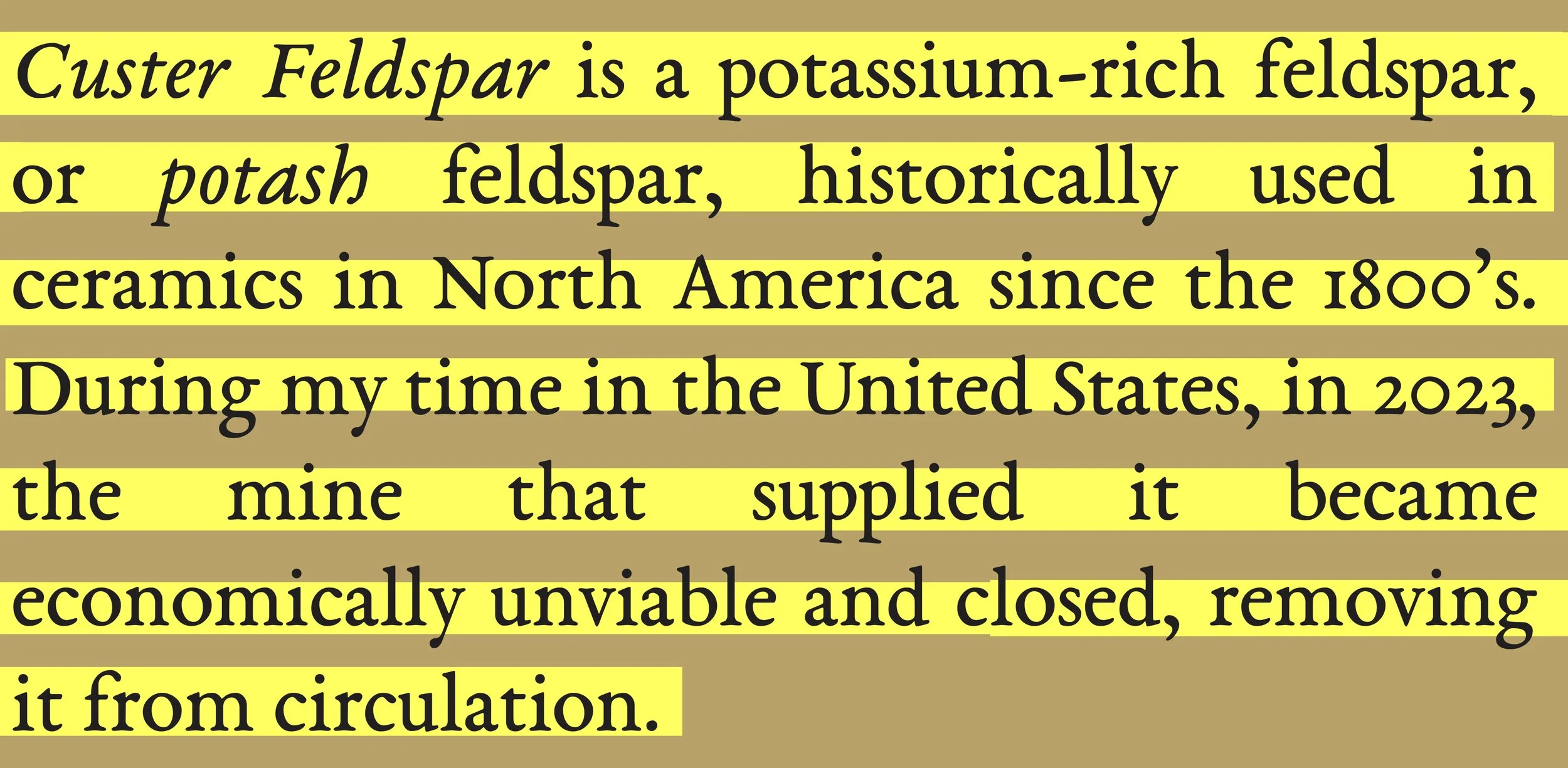
Looking back as I was finishing this body of work, I made connections that reminded me how deeply materials are tied to place. Custer Feldspar’s geological origin is embedded in the Black Hills region of South Dakota in North America. This landscape is shaped by colonial expansion and the violent seizure of Lakota land following the discovery of gold in the 1870s under the leadership of American General Custer, the name-sake of this feldspar. His 1874 expedition opened the region up to intensified mining and settler occupation. This contributed to the outbreak of the Great Sioux War and the displacement and deaths of thousands of Indigenous people across the Plains as the United States consolidated control over land and mineral resources. Custer himself was later killed at the Battle of the Little Bighorn in 1876 by a coalition of Lakota, Northern Cheyenne, and Arapaho forces. This moment is often framed as historical irony, although it did not interrupt the broader continuation of U.S. territorial expansion, resource extraction, and ongoing Indigenous dispossession in the region. While this connection emerged after the development of this body of work, it further reinforces the extent to which ceramic materials carry layered ecological, geological, and historical conditions.
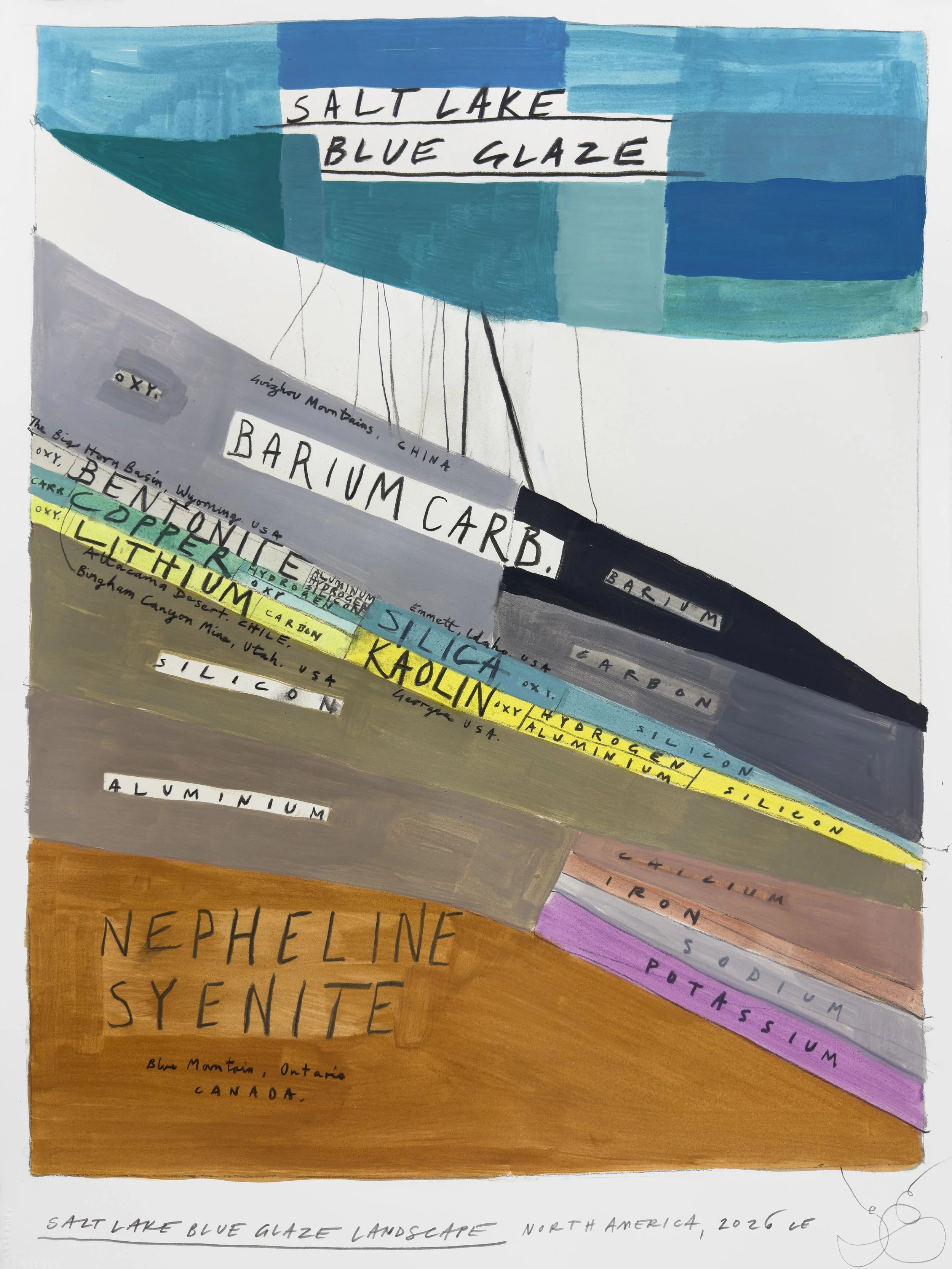
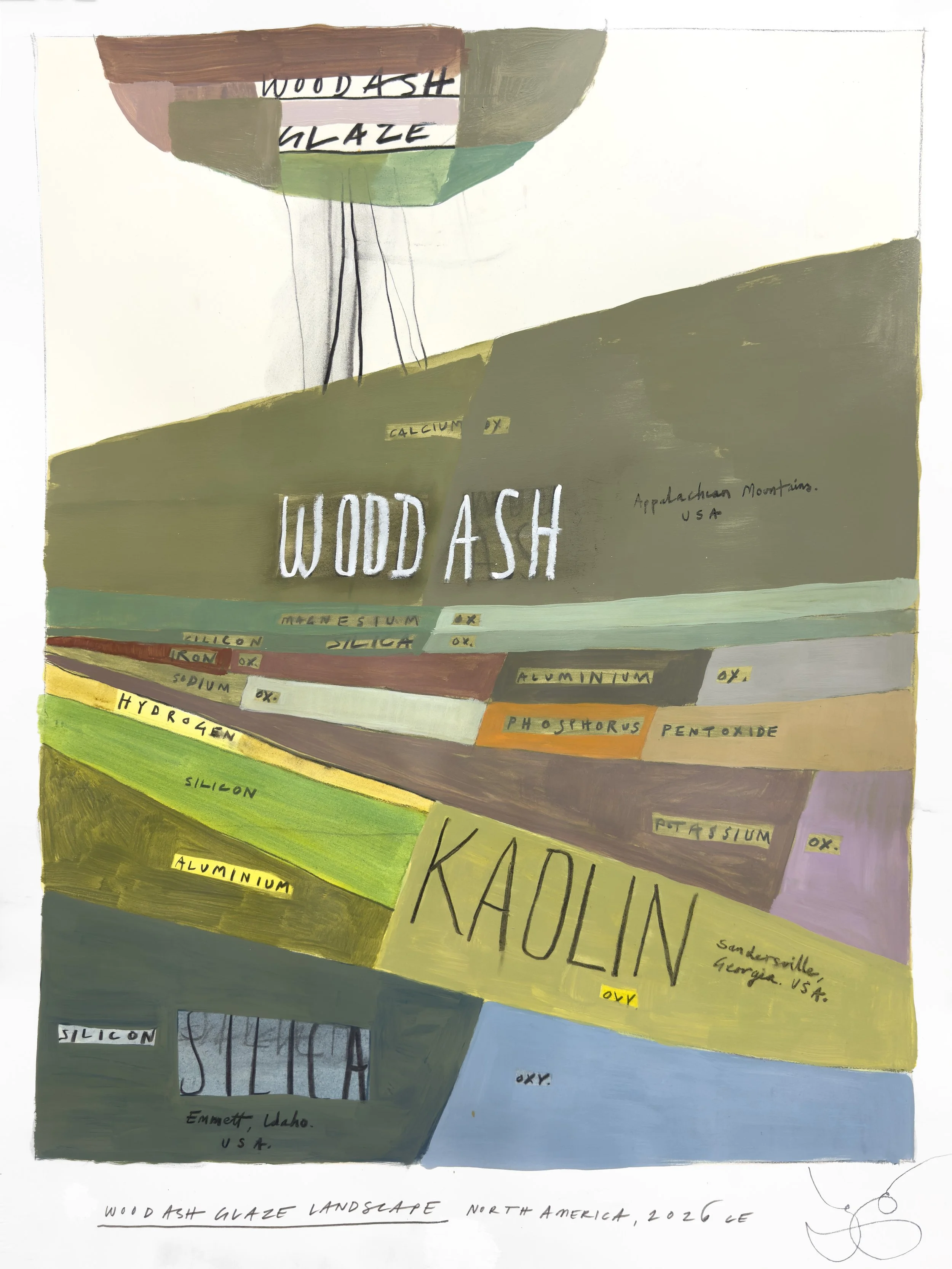
I chose glazes that are most well known by ceramicists throughout art history, as well as ones I have found like Salt Lake Blue, specific to my new North American location.